
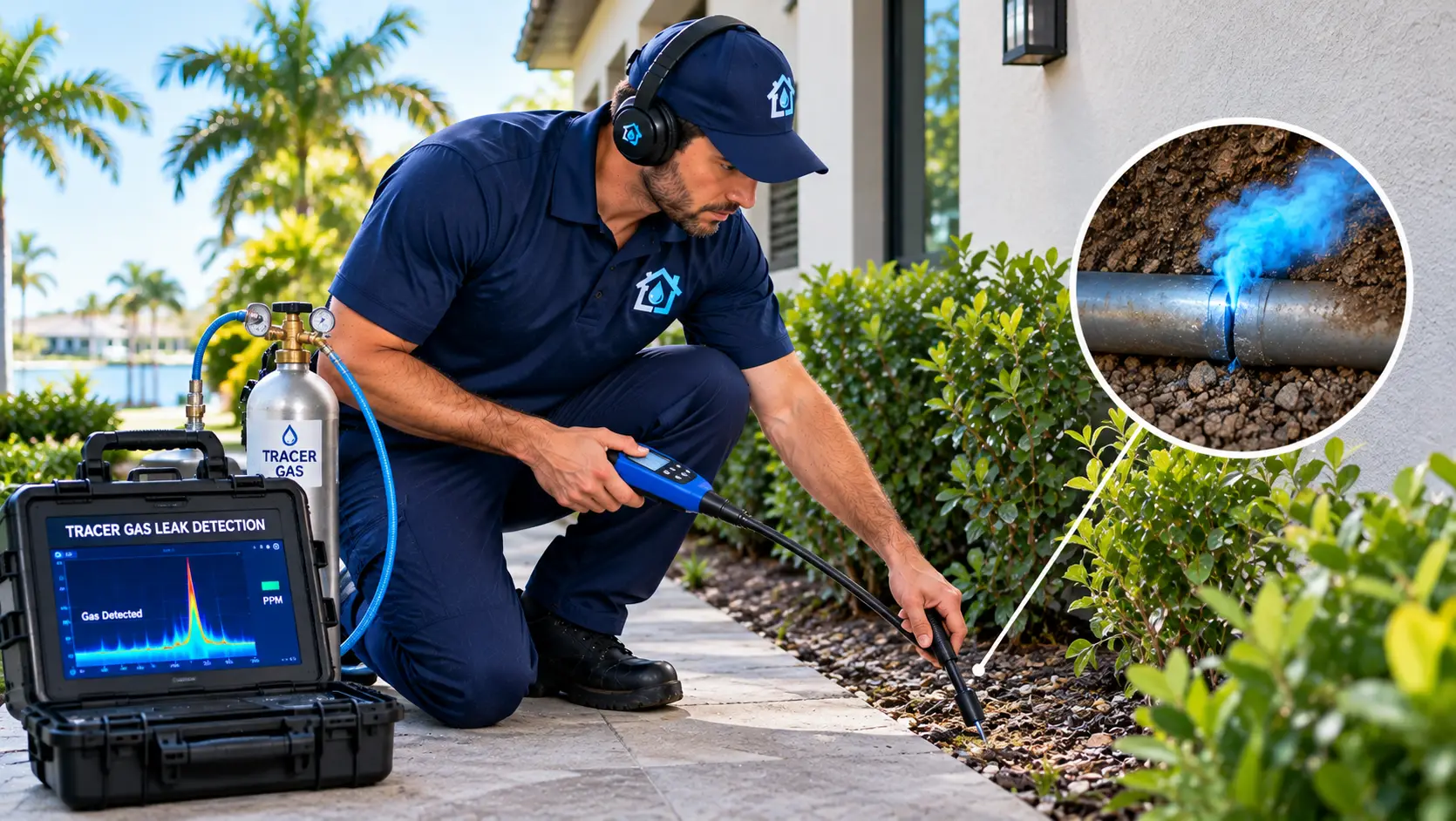
Sensitive Tracer Gas Leak Detection Naples FL, For Quiet and Hard to Find Leaks
Some leaks barely make a sound: a pinhole in plastic pipe, a slow seep in a long yard line, a leak under thick stone. Tracer gas leak detection Naples FL homeowners turn to fills the drained line with a safe gas mix that escapes through the leak and rises through soil and concrete, where a sensitive sniffer finds the exact spot.
- Safe hydrogen and nitrogen mix
- Works on PEX, CPVC & copper
- Long yard lines & pavers
- Finds very small leaks
What Is Tracer Gas Leak Detection?
Tracer gas leak detection finds leaks by draining a water line and filling it with a safe gas, usually a mix of about 5 percent hydrogen and 95 percent nitrogen. Hydrogen is the smallest molecule, so it escapes through even tiny leaks and works its way up through soil, concrete and grout. A handheld sensor sweeps the surface and alarms where the gas comes up, which marks the leak.
- Gas used
- About 5% hydrogen, 95% nitrogen
- Why it works
- Hydrogen escapes through tiny openings and rises
- Best for
- Quiet leaks, plastic pipe, long buried lines
- Safety
- Non toxic and non flammable at this mix
Key takeaways
- Tracer gas finds leaks that are too quiet for acoustic equipment.
- It works well on PEX and CPVC lines and on long buried runs in big yards.
- The line is drained first, so the gas, not water, shows where the leak is.
When Is Tracer Gas the Right Choice?
Tracer gas is usually the second or third tool, brought out when listening and thermal imaging cannot settle it.
Very small leaks
A slow drip that moves the meter only a little may not make enough sound to hear, but gas still escapes.
Plastic pipe
PEX and CPVC leaks can be quiet. Gas escapes from plastic just as it does from copper.
Long yard lines
On estate lots and golf course homes, long buried lines are swept for gas instead of trenched.
Under pavers and stone
Gas works its way through joints in pavers and grout lines in stone, often right above the leak.
Noisy surroundings
Near busy roads, pool equipment or AC units, gas is not affected by background noise.
Second opinion
When acoustic readings are unclear, gas confirms the spot before anyone opens a floor.
Signs Your Leak May Need Tracer Gas
These situations often end with tracer gas, even if the visit starts with other tools.
Slow meter movement
The leak indicator creeps instead of spinning, pointing to a small leak.
Earlier search came up empty
A previous visit confirmed a leak but could not pinpoint it.
Home plumbed in PEX or CPVC
Newer homes and repiped homes often have plastic lines that leak quietly.
Long line to the house
A large lot with a long run from the meter or well.
Leak under pavers or a pool deck
A driveway, pool deck or patio sits over the suspected line.
No warm spot, no sound
Nothing shows on thermal or acoustic gear, but the meter says water is going somewhere.
How Does Tracer Gas Leak Detection Work?
Short answer: drain the line, fill it with gas, then sweep the surface for where the gas comes up.
- Isolate the leaking linePressure tests confirm which line is losing water, so only that line is used.
- Drain the lineWater is drained from the section so the gas can travel through it.
- Fill with tracer gasThe hydrogen and nitrogen mix is fed into the line at a controlled pressure.
- Let it travelThe gas escapes through the leak and moves up through soil, concrete or joints.
- Sweep with the sensorA handheld detector is moved across the floor or ground until it alarms over the leak.
- Mark, refill and reportThe spot is marked, the line is refilled with water, and you get notes for the repair.

When the Leak Will Not Talk, the Gas Will
Tracer gas settles the hard cases, so you dig or open only where the leak actually is.
Tracer Gas vs Acoustic Leak Detection
Both pinpoint leaks in pressurized lines. They shine in different conditions.
| Factor | Acoustic listening | Tracer gas |
|---|---|---|
| Very small leaks | Can be too quiet to hear | Finds them reliably |
| Plastic pipe | Sound can be faint | Works well |
| Background noise | Affected by pumps and traffic | Not affected |
| Setup time | Fast, line stays full | Line drained and filled with gas |
| Typical use | First pinpointing tool | Hard or quiet cases, confirmation |
How Much Does Tracer Gas Leak Detection Cost in Naples?
Straight answer: tracer gas adds setup time and materials, so it usually costs more than a standard acoustic search, often a few hundred dollars and up depending on line length.
| Situation | Typical range |
|---|---|
| Short line, single area | A few hundred dollars |
| Long yard line or large lot | Higher, quoted on the call |
| Added to a standard visit | Extra for gas and setup |
Ballpark figures based on published pricing, not a quote. Finding the leak and fixing it are billed separately.
Have these ready
- Results of any earlier leak search
- Pipe type if you know it (PEX, CPVC, copper)
- Where the line runs, if known
- Access to the meter or well
Where Tracer Gas Earns Its Keep Around Naples
Lot size, pipe type and surface materials decide how often gas is needed.
Golden Gate Estates
Long lines from the well to the house on acreage are ideal for a gas sweep instead of trenching.
Leak detection in Golden Gate Estates → 34105 · 34108Pine Ridge & Grey Oaks
Estate lots with guest houses and pools have several long runs to check.
Leak detection in Pine Ridge → 34109 · 34119North Naples
Many 1990s and 2000s homes use CPVC or PEX, which often leak more quietly than copper.
Leak detection in North Naples → 34114Fiddler's Creek
Pavers, pool decks and landscaped beds sit over lines, and gas comes up through the joints.
Leak detection in Fiddler's Creek → 34113Lely & Isles of Capri
Newer Lely Resort homes with plastic lines can have quiet leaks under tile.
Leak detection in Lely → 34103Park Shore & The Moorings
Canal homes with paver drives and seawall lots have long, hard to reach runs.
Leak detection in Park Shore →Tracer Gas Leak Detection Naples FL Across Every ZIP Code
Plastic, copper, short run or long, every residential Naples ZIP code is covered.
Tracer Gas Leak Detection FAQs
Is tracer gas safe in my home?
Yes. The usual mix is about 5 percent hydrogen and 95 percent nitrogen, which is non toxic and non flammable. Small amounts escape and disperse harmlessly.
Will tracer gas affect my drinking water?
No. The line is flushed and refilled with water after the test, and the gas does not leave anything behind.
Why use hydrogen?
Hydrogen is the smallest molecule, so it escapes through very small openings and rises quickly through soil and concrete, where the sensor can detect it.
Can tracer gas find a leak under concrete?
Yes. Gas works its way up through the slab, cracks and grout lines. It may take some time to come through thick concrete.
Does it work on PEX pipe?
Yes. Gas escapes from a leak in plastic pipe just as it does from copper, which makes it useful for quieter plastic line leaks.
Do I lose water during the test?
The tested line is drained and out of service for the test, usually a short time. Other parts of the house can often stay on.
Can tracer gas find drain leaks?
It is used on pressurized water lines. Drain leaks are usually found with a camera inspection and flow testing.
Why not use tracer gas every time?
It takes more setup than acoustic listening. Many leaks are found faster by sound, so gas is saved for quiet or confusing cases.
How much does tracer gas leak detection cost in Naples?
Usually a few hundred dollars and up, depending on line length and setup. Ask for the price on the call.
Can it find a leak under my pool deck?
It can find leaks in water supply lines that run under a deck. Pool shell and plumbing leaks are a separate specialty.
Sources for This Page
Written for Naples homeowners from public agency guidance and standard leak detection practice. Prices are general ranges, not quotes, and nothing here is legal or insurance advice.
Other Leaks We Help Naples Homeowners Find
Quiet Leak? Let the Gas Find It
One call gets a licensed Naples leak detection pro on the way to track the leak down, however small.
Call Now: (239) 448-0268