
What Are the 9 Signs of a Slab Leak?
Here they are in the order most Naples homeowners notice them. You do not need all nine. A slab leak usually shows two or three.
1. The water bill keeps climbing
Same household, same routine, but the bill from City of Naples Utilities or Collier County is higher two or three months in a row. A slab leak runs all day and night, so even a small one adds thousands of gallons a month. Compare the same month last year to rule out seasonal changes like irrigation or houseguests.
2. The meter moves with everything off
This is the clearest sign of all. Turn off every faucet, the irrigation, the ice maker and the pool fill, then look at the leak indicator on the meter at the street. If it is turning, water is going somewhere. The water meter leak test guide walks through it step by step.
3. A warm or hot spot on the floor
Walk the house barefoot early in the morning, before anyone showers. A patch of tile or terrazzo that feels warm when no hot water is running usually means a hot water line under the slab is leaking. Pets often find it first. A dog that suddenly sleeps in one spot every night is a classic Naples story.
4. The sound of running water
At night, with the AC and pool pump off, put your ear near the floor by kitchens and bathrooms. A faint hiss or rush with every tap closed is water escaping a pressurized line.
5. Damp carpet, swollen baseboards or loose tile
Water rising from below wets the carpet pad first, swells wood baseboards and can loosen tile or leave grout dark in one area that never dries.
6. New cracks in the floor or walls
A leak can wash sand out from under the slab. As the soil shifts, cracks can appear in tile, terrazzo or drywall near the floor. In Naples, cracks after storms like Hurricane Ian are common for other reasons too, so pair this sign with a meter check.
7. The water heater never seems to rest
If the heater runs at night when nobody is using hot water, it is reheating water that is leaking from a hot line. Your FPL bill may rise along with the water bill.
8. Low water pressure
A large leak can drop pressure at several fixtures at once, especially when two run at the same time.
9. A musty smell or mold near the floor
Constant moisture under flooring brings a musty smell and mold along baseboards or inside lower cabinets, even when nothing looks wet.
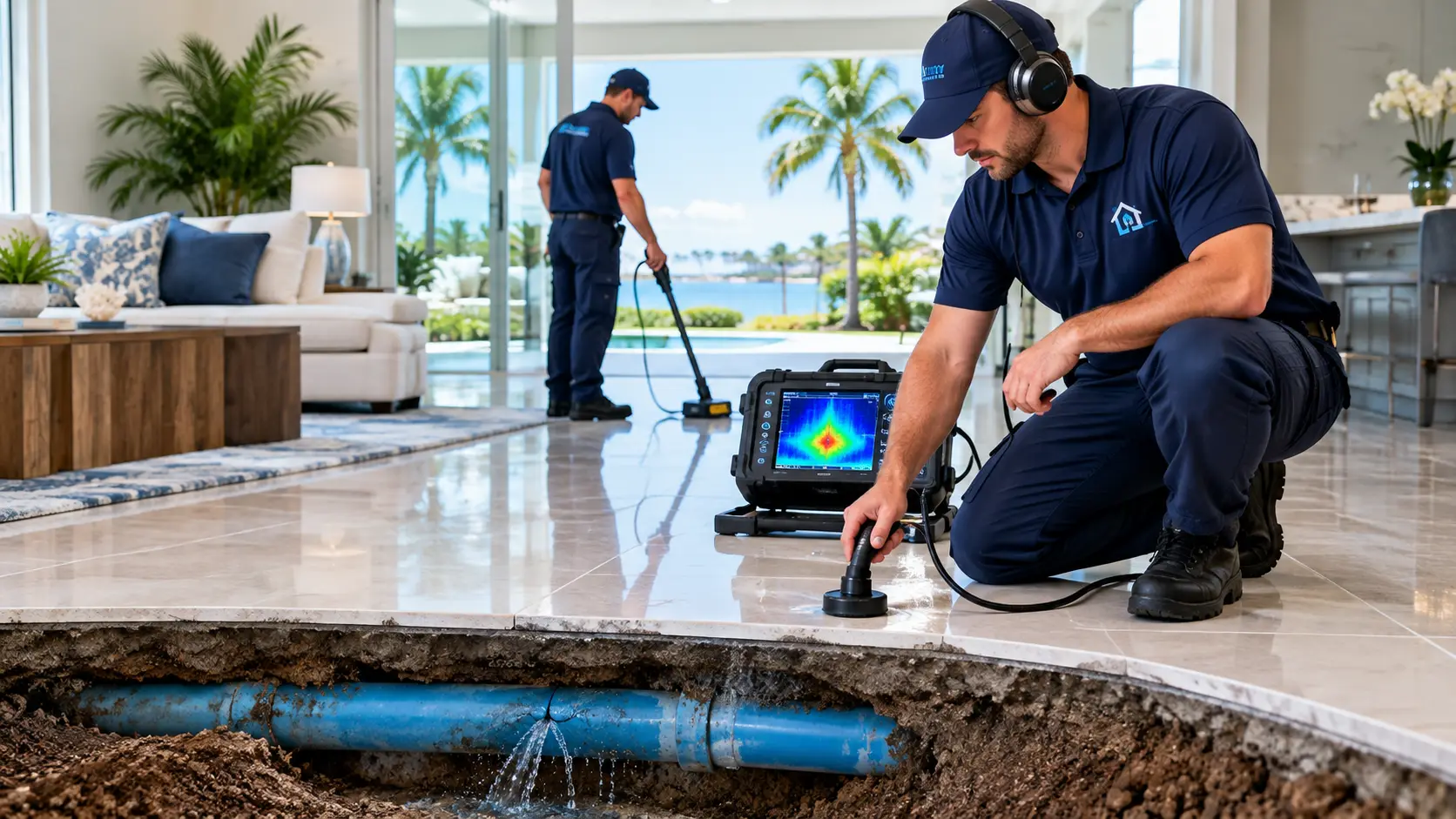
A licensed leak tech can confirm it and mark the leak without breaking the floor.
How Can I Confirm a Slab Leak in 10 Minutes?
- Turn off every water use. Faucets, toilets, the dishwasher, washing machine, irrigation, pool auto fill and the ice maker.
- Check the meter. Find the meter box near the street and watch the small triangle or dial for two minutes.
- Close the main valve at the house. If the meter stops, the leak is inside the house. If it keeps moving, the leak is in the yard line between the meter and the house.
- Close the water heater's cold inlet. With the main back open, if closing this valve stops the meter, the leak is on the hot side.
What Looks Like a Slab Leak but Is Not?
- A running toilet. The most common cause of a moving meter. Put a few drops of food coloring in the tank. Color in the bowl after 15 minutes means a leaking flapper.
- Irrigation. A cracked sprinkler line or stuck zone valve moves the meter too. Shut the irrigation valve and check again.
- Sun on the floor. Afternoon sun through sliding doors warms tile. Check warm spots early in the morning.
- A drain leak. If the floor is wet but the meter is still, the problem may be a drain, which is not under pressure. See drain line leak detection.
- AC condensate. A clogged condensate line can wet a floor or wall near the air handler, especially in summer humidity.
Why Do Naples Slabs Leak?
Most Naples homes sit on concrete slabs over sand, shell and fill, with supply lines running through or under the concrete. Homes built from the 1960s through the 1990s mostly used copper, which pinholes over time. Hot lines expand and rub against concrete every day. Canal neighborhoods like Port Royal and The Moorings sit on dredged fill that settles, and storm surge from Hurricane Ian soaked and shifted the ground across much of the city. The full story is in what causes slab leaks.
What Should I Do If I See These Signs?
Run the meter test first. If it shows a leak, call for slab leak detection. A tech will pressure test the lines, narrow the area with thermal imaging and pinpoint it with electronic listening, so only one small spot is opened or the line is rerouted. If water is visible and spreading, close the main valve and treat it as an emergency.